The social influence bias is an asymmetric herding effect on online social media platforms which makes users overcompensate for negative ratings but amplify positive ones. Driven by the desire to be accepted within a specific group, it surrounds the idea that people alter certain behaviors to be like those of the people within a group. Therefore, it is a subgroup term for various types of cognitive biases. Some social influence bias types include the bandwagon effect, authority bias, groupthinking effect, social comparison bias, social media bias and more. Understanding these biases helps us understand the term overall. However, the composition of the term "social influence bias" requires critical examination to understand the way that it affects individuals' and groups' lives. The term "influence" has 2 different types of stigma. For one, it surrounds the idea that people show their true inner selves when "under the influence". On the other end, it also proposes the idea that people are not their own selves when "under the influence". These tend to be constructions made by people, which also tend to fit the situation based on their own perspectives. So, even in social terms, it requires both sides to be examined to understand whether we truly are affected by context, or we remain to be and behave in terms of our own selves. The term "influence" doesn't necessarily say that there lies greater strength in our inner self's desires and decisions, nor does it say that external factors have the greater power. In a similar manner, both social and non-social judgments are to be associated with anxiety, but the same can't necessarily be said in the case of social conformity. So, the gray areas within this topic beg the question, "What does social influence bias say about us, and does it affect us all in the same way?" == Social media bias == Media bias is reflected in search systems in social media. Kulshrestha and her team found through research in 2018 that the top-ranked results returned by these search engines can influence users' perceptions when they conduct searches for events or people, which is particularly reflected in political bias and polarizing topics. Fueled by confirmation bias, online echo chambers allow users to be steeped within their own ideology. Because social media is tailored to your interests and your selected friends, it is an easy outlet for political echo chambers. Social media bias is also reflected in hostile media effect. Social media has a place in disseminating news in modern society, where viewers are exposed to other people's comments while reading news articles. In their 2020 study, Gearhart and her team showed that viewers' perceptions of bias increased and perceptions of credibility decreased after seeing comments with which they held different opinions. == In research context == In observational data, how social influence affects collected judgment is challenging to fully understand. Positive social influence can accumulate and result in a rating bubble, while negative social influence is neutralized by crowd correction. This phenomenon was first described in a paper written by Lev Muchnik, Sinan Aral and Sean J. Taylor in 2014, then the question was revisited by Cicognani et al., whose experiment reinforced Munchnik's and his co-authors' results. == Relevance == Online customer reviews are trusted sources of information in various contexts such as online marketplaces, dining, accommodation, movies, or digital products. However, these online ratings are not immune to herd behavior, which means that subsequent reviews are not independent from each other. As on many such sites, preceding opinions are visible to a new reviewer, he or she can be heavily influenced by the antecedent evaluations in his or her decision about the certain product, service or online content. This form of herding behavior inspired Muchnik, Aral and Taylor to conduct their experiment on influence in social contexts. == Experimental design == Muchnik, Aral, and Taylor designed a large-scale randomized experiment to measure social influence on user reviews. The experiment was conducted on social news aggregation website like Reddit. The study lasted for 5 months, the authors randomly assigned 101 281 comments to one of the following treatment groups: up-treated (4049), down-treated (1942), or control (the proportions reflect the observed ratio of up-and down-votes. Comments which fell to the first group were given an up-vote upon the creation of the comment, the second group got a down-vote upon creation, the comments in the control group remained untouched. A vote is equivalent to a single rating (+1 or -1). As other users are unable to trace a user’s votes, they were unaware of the experiment. Due to randomization, comments in the control and the treatment group were not different in terms of expected rating. The treated comments were viewed more than 10 million times and rated 308 515 times by successive users. == Results == The up-vote treatment increased the probability of up-voting by the first viewer by 32% over the control group, while the probability of down-voting did not change compared to the control group, which means that users did not correct the random positive rating. The upward bias remained inplace for the observed 5-month period. The accumulating herding effect increased the comment’s mean rating by 25% compared to the control group comments. Positively manipulated comments did receive higher ratings at all parts of the distribution, which means that they were also more likely to collect extremely high scores. The negative manipulation created an asymmetric herd effect: although the probability of subsequent down-votes was increased by the negative treatment, the probability of up-voting also grew for these comments. The community performed a correction which neutralized the negative treatment and resulted non-different final mean ratings from the control group. The authors also compared the final mean scores of comments across the most active topic categories on the website. The observed positive herding effect was present in the "politics," "culture and society," and "business" subreddits, but was not applicable for "economics," "IT," "fun," and "general news".- == Implications == The skewed nature of online ratings makes review outcomes different to what it would be without the social influence bias. In a 2009 experiment by Hu, Zhang and Pavlou showed that the distribution of reviews of a certain product made by unconnected individuals is approximately normal, however, the rating of the same product on Amazon followed a J-Shaped distribution with twice as much five-star ratings than others. Cicognani, Figini and Magnani came to similar conclusions after their experiment conducted on a tourism services website: positive preceding ratings influenced raters' behavior more than mediocre ones. Positive crowd correction makes community-based opinions upward-biased.
Socially assistive robot
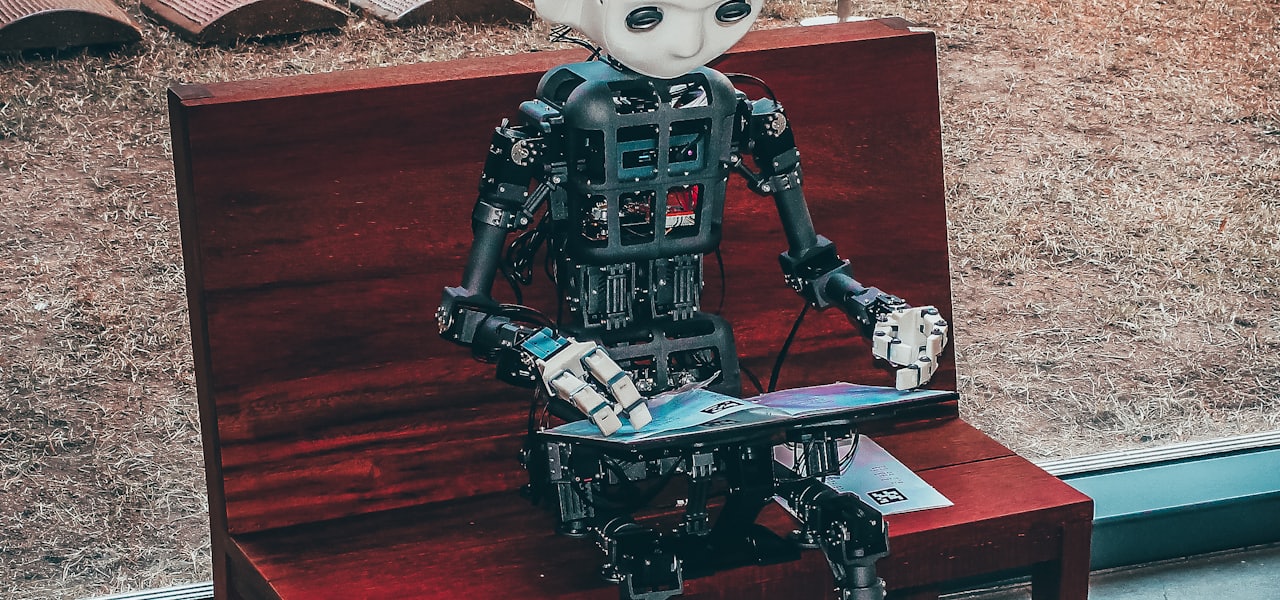
A socially assistive robot (SAR) aids users through social engagement and support rather than through physical tasks and interactions. == Background == The field of socially assistive robotics emerged in the early 2000s, following the emergence of the field of social robots. In contrast to social robots, SARs aid users with specific goals related to behavior change rather than serving as purely social entities. The term "Socially assistive robot" was initially defined by Maja Matarić and David Feil-Seifer in 2005. Since its inception, the field has gained substantial recognition, featuring numerous research projects, a wealth of global research publications, startup companies, and a growing array of products on the consumer market. The COVID-19 pandemic has underscored the immense potential of socially assistive robots, particularly in addressing the needs of large user populations, including children engaged in remote learning, elderly individuals grappling with loneliness, and those affected by social isolation and its associated negative consequences. == Characteristics of interaction == SARs rely on artificial intelligence (AI) to generate real-time, responsive, natural, and meaningful robot behaviors during interactions with humans. The robots employ various forms of communication, such as facial expressions, gestures, body movements, and speech. In contrast to robots intended for physical tasks, SARs are designed to support and motivate users to perform their own tasks. The tasks a user engages in can be physical (e.g., rehabilitation exercises for post-stroke users), cognitive (e.g., dementia screening for elderly users), or social (e.g., turn-taking for users with autism spectrum disorders). This complex interaction involves detecting and interpreting the user's movement, behavior, intent, goals, speech, and preferences. Machine learning and robot learning techniques are frequently employed to enhance the robot's understanding of the user, predict user preferences, and provide effective assistance. The effectiveness of socially assistive robots is assessed based on objective measurements of user performance and improvement resulting from the robot’s assistance and support. Unlike other branches of robotics, where effectiveness depends on the robot's physical task completion, SAR measures the success of the robot based on the user's progress and achievements. This evaluation is carried out using quantitative objective metrics, such as time spent on tasks, accuracy, retention, and verbalization, as well as quantitative subjective metrics, such as user survey tools. SAR is based on the large body of evidence showing that users tend to respond more positively to interactions with physical robots compared to interactions with screens. Interaction with physical robots also encourages users to learn and retain more information than screen-based interactions. This fundamental insight underlines why physical robots in SAR applications are more effective, as opposed to interactions solely involving screens, tablets, or computers. == Uses and applications == SARs have been developed and validated in a wide array of applications, including healthcare, elder care, education, and training. For example, SARs have been developed to support children on the autism spectrum in acquiring and practicing social and cognitive skills, to motivate and coach stroke patients throughout their rehabilitation exercises, monitoring individuals health (ex. fall detection), and to encourage elderly users to be more physically and socially active. There is a concern that technophobia and lack of trust in robots will pose a barrier to the effectiveness of SARs in older adults.
Soterml
SoTerML (Soil and Terrain Markup Language) is a XML-based markup language for storing and exchanging soil and terrain related data. SoTerML development is being done within The e-SoTer Platform. GEOSS plans a global Earth Observation System and, within this framework, the e-SOTER project addresses the felt need for a global soil and terrain database. The Centre for Geospatial Science (Currently Nottingham Geospatial Institute) at the University of Nottingham has initiated the development since January 2009. Further development and maintenance is currently handled in National Soil Resources Institute (NSRI) at Cranfield University, UK. The role of CGS is within the development of the e-SOTER dissemination platform, which is based on INSPIRE principles. The SoTerML development included: 1. Development of a data dictionary for nomenclatures and various data sources (data and metadata). 2. Development of an exchange format/procedures from the World Reference Base 2006.
Roposo
Roposo is an Indian video-sharing social media service, owned by Glance, a subsidiary of InMobi. Roposo provides a space where users can share posts related to different topics like food, comedy, music, poetry, fashion and travel. It is a platform where people express visually with homemade videos and photos. The app offers a TV-like browsing experience with user-generated content on its channels. Users can also use editing tools on the platform and upload their content. == History == Established in July 2014 under Relevant E-solutions Pvt. Ltd., Roposo is the brainchild of three IIT Delhi alumni – Mayank Bhangadia, Avinash Saxena, and Kaushal Shubhank. Under Bhangadia's leadership, the company pivoted from a fashion-based network into a short-form video platform with AI-powered moderation, and its journey was featured as a Harvard Business Publishing case study. In November 2019, Roposo was acquired by InMobi's Glance Digital Experience Pvt. Ltd.(the mobile content platform and part of the InMobi Group). When the Chinese-owned video-sharing app TikTok was banned on 30 June 2020, the app saw a huge spike in users with several TikTok users registering on Roposo. == Technology == The open platform has some features such as a TV-like browsing, different channels, a chat feature that lets buyers and sellers converse directly through the platform, and creation tools such as an option to add voice-over, music and GIF stickers for videos and photos.
NRD Cyber Security
NRD Cyber Security is a Lithuanian company that provides cybersecurity solutions, consulting, and other services. The organization specializes in CSIRT and SOC creation, modernization and training. It has helped to establish national and sectorial CSIRTs around the world, including countries, such as Bangladesh, Egypt, Bhutan, Kosovo, Malawi and others. NRD Cyber Security was found in 2013 to provide quality cybersecurity services to nations and organizations. In 2018 it was included in The Deloitte Technology Fast 50 in Europe list. In 2024 it was awarded the #98 place in MSSP Alert Top 250 world's managed security service providers. The company is a member of various cybersecurity organizations, such as Forum of Incident Response and Security Teams (FIRST), The Global Forum on Cyber Expertise (GFCE), Unicrons Lt. It is a strategic partner of The Global Cyber Security Capacity Centre (GCSCC) at University of Oxford.
Reference Software International
Reference Software International, Inc. (RSI), was an American software developer active from 1985 to 1993 and based in Albuquerque, New Mexico, and San Francisco, California. The company released several productivity and reference software packages, including the Grammatik grammar checker, for MS-DOS. The company was acquired by WordPerfect Corporation in 1993. == History == === Background (1980–1985) === Reference Software International, Inc., was founded by Donald "Don" Emery and Bruce Wampler in 1985 in San Francisco, California. Both Wampler and Emery were college professors when they founded RSI: Wampler at the University of New Mexico as a professor of computer science and Emery a professor of marketing at San Francisco State University. After graduating from the University of Utah in around 1978, Wampler founded his first software company, Aspen Software, in Tijeras, New Mexico, in 1979. Wampler founded Aspen to develop an early spell checker software package, called Proofreader, for the TRS-80, licensing Random House's Webster's Unabridged Dictionary for the package's lexicon. In 1980, he began development on a grammar checker inspired by Writer's Workbench, a pioneering grammar checker for Unix systems. Wampler used Writer's Workbench heavily during the writer of his doctoral dissertation but disliked having to jump between the Apple II on which he composed the dissertation and the mainframe on which Writer's Workbench ran, and so wanted to develop a version of the latter for microcomputers. Wampler's work came to fruition as Grammatik in 1981, eventually ported to several other microcomputer platforms in the early 1980s. In 1983, by which point the company had 12 employees and sold a combined 80,000 units of Grammatik and Proofreader, Wampler sold Aspen to Dictronics, a software company best known for developing the Electronic Thesaurus, an early thesaurus program for microcomputers. Dictronics was in turn purchased by Wang Laboratories; according to Wampler, "Wang bought [Aspen] and sat on it. They did nothing with it". Wampler moved on to teach for the University of New Mexico, but, frustrated by Wang's inaction, got the urge to resurrect his work. In 1985, he was able to license back Grammatik and Proofreader from a small California-based software firm that had grandfathered rights to a forked version of both. In the same year, he met Emery, who, impressed by Wampler's, founded Reference Software International to market his software. RSI's research and development headquarters were based in Albuquerque, while the company's sales and marketing department was based in Walnut Creek, California. === Success (1985–1992) === In August 1985, RSI released their first product: the Random House Reference Set, a new version of Proofreader for the IBM Personal Computer and compatibles, revised to be a terminate-and-stay-resident program that ran atop other word processors such as WordStar or WordPerfect. At the time, Reference Set was the only such program on the market that functioned like this. RSI netted $114,000 from sales of Reference Set by the end of 1985. In June 1986, they released version 2.0 of Grammatik as Grammatik II for the PC. The latter was a breakout hit for RSI, receiving praise in the press (including technology journals such as PC Magazine) and RSI selling 1,000 units a month. In spring 1987, they released Reference Set II, which allowed users to import their own words into the built-in dictionary and added a thesaurus of 300,000 words. In November 1987, they released version 3.0 of Reference Set, which comprised two new field-specific dictionaries for the medical and legal professions. As well as the general Random House dictionary and thesaurus, it included Stedman's Medical Dictionary and Black's Law Dictionary. Emery consulted Paul Brest and Bob Jackson—professors of law at Stanford Law School and San Francisco State respectively—for the curation of the law dictionary; and Burton Grebin—at the time the executive director of Mount Saint Mary's Hospital—for the curation of the medical dictionary. In fall 1988, the company released Grammatik III, a total rewrite that made use of artificial intelligence to more accurately judge the grammar of sentences by breaking them down into a syntactic hierarchy. Grammatik III received universal acclaim, with Gloria Morris of InfoWorld calling it the apparent leader in the grammar checking field and Sandra Anderson of Mac Home Journal calling it "hands down ... the best of the industry" six years after its release. By 1989, the product had competitors in Correct Grammar by Lifetree Software and RightWriter by Rightsoft, Inc. By 1990, RSI achieved annual sales of $9.7 million. In the same year they released Grammatik IV, which was the first to offer direct integration with WordPerfect on both MS-DOS and Windows. In March 1992—by which point RSI had sold 1.5 million copies of Grammatik across all versions—the company released version 5 of the program, another rewrite that updated the lexicon further and added new functions such as word redundancy detection. Around the same time, the company introduced Easy Proof, a pared-down version of Grammatik intended for novice writers, students, and family computers. In 1991, the company was engaged in a trademark dispute with Systems Compatibility Corporation (SCC) of Chicago, Illinois, over the rights to the Software Toolkit title. Both companies had published software bundles bearing the name in the turn of the 1990s; SCC had published theirs first in 1988 and registered the trademark with the USPTO. SCC was granted a restraining order against RSI in January 1991. The following month, RSI agreed to rename their product, preventing a protracted legal battle. === Decline and acquisition (1992–1993) === By early 1992, RSI achieved annual sales of more than $13 million, employed 120 people, and had opened international offices in London, Belgium, and Antwerp to sell foreign versions of Reference Set and Grammatik. The company reached peak employment in the middle of 1992, with 140 employees. However, RSI's launch of six disparate titles in the year proved problematic for the company when they failed to sell as well as they had projected, and the company laid off employees by the dozens. By December 1992, only 71 employees were left, 32 from their San Francisco office. On the last day of 1992, RSI received an acquisition offer from WordPerfect Corporation, makers of the namesake word processor based in Orem, Utah. The deal was inked in January 1993, RSI's stakeholders receiving $19 million. The company's remaining employees were absorbed into WordPerfect in Orem. WordPerfect continued selling Grammatik as a standalone product for several years.
Shader lamps
Shader lamps is a computer graphic technique used to change the appearance of physical objects. The still or moving objects are illuminated, using one or more video projectors, by static or animated texture or video stream. The method was invented at University of North Carolina at Chapel Hill by Ramesh Raskar, Greg Welch, Kok-lim Low and Deepak Bandyopadhyay in 1999 [1] as a follow on to Spatial Augmented Reality [2] also invented at University of North Carolina at Chapel Hill in 1998 by Ramesh Raskar, Greg Welch and Henry Fuchs. A 3D graphic rendering software is typically used to compute the deformation caused by the non perpendicular, non-planar or even complex projection surface. Complex objects (or aggregation of multiple simple objects) create self shadows that must be compensated by using several projectors. The objects are typically replaced by neutral color ones, the projection giving all its visual properties, thus the name shader lamps. The technique can be used to create a sense of invisibility, by rendering transparency. The object is illuminated not by a replacement of its own visual properties, but by the corresponding visual surface placed behind the object as seen from an arbitrary viewing point.